
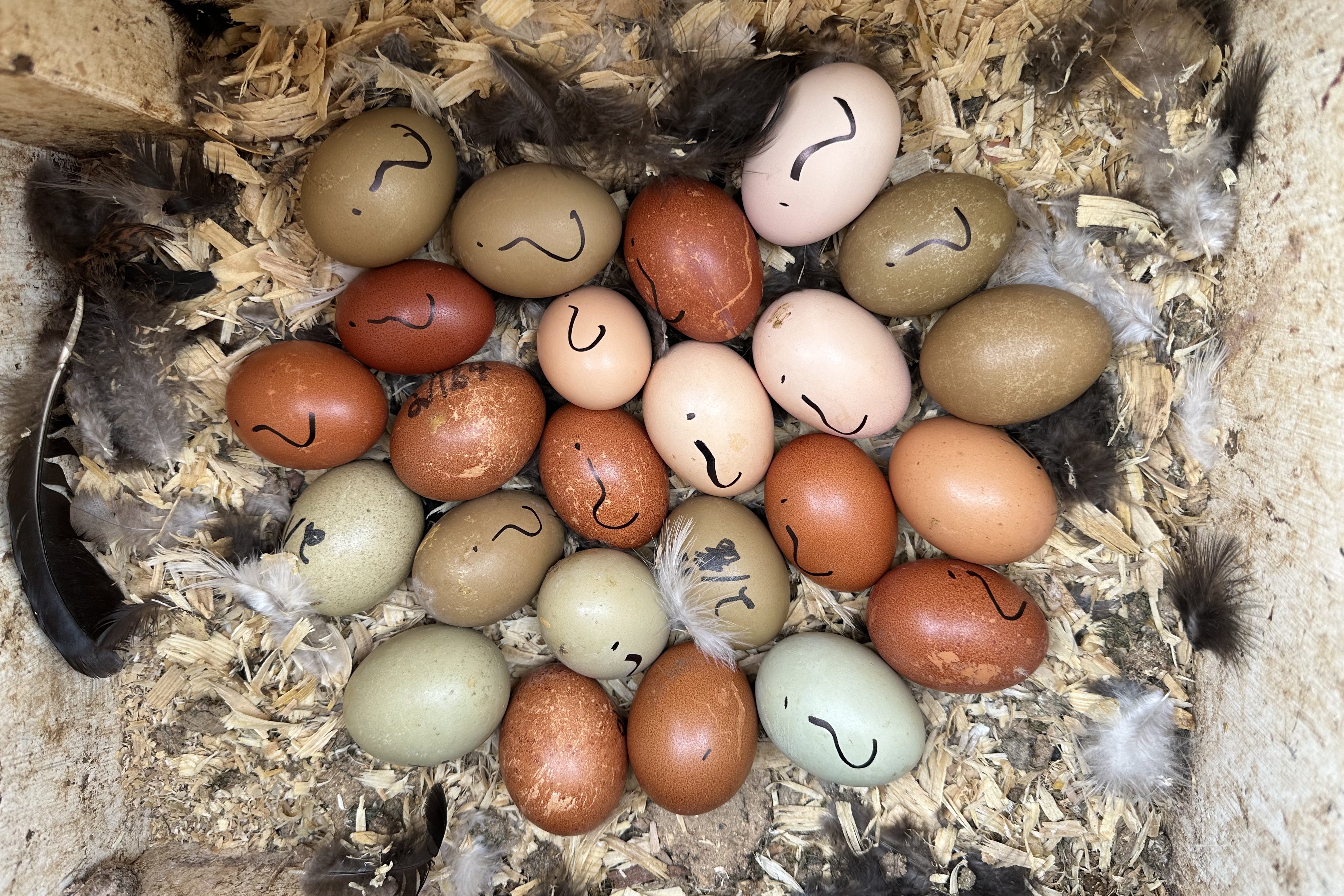
Chicken genetics, probably like all genetics period, can get pretty complicated. I am not a biology specialist, but I have spent a lot of time down all the chicken genetic rabbit holes. In order to not make things too complicated, I’d love to chat about just egg color genetics today.
We have some chickens currently sitting on 3 clutches of eggs, and we are so excited for them to hatch (especially my daughters). We have an Americana rooster (Blue egg gene rooster) and a mix of Marans (Dark brown egg layers), Rhode Island, Barnevelders and Plymouth Rock (Brown and cream egg layers), Americana (blue egg layers) and Olive egger (Olive egg layers… Shocking by the name, I know) hens. My goal was to diversify our already colorful egg harvest even more and add to its numbers. My kids have also always wanted to hatch out our own eggs, so I decided it was time.
Now, to explain egg coloring genetics you first have to know that there are 2 variables that create the color of an egg. The color of the egg shell itself and the color of the spray and bloom (think of it as a spray of paint on top of the egg shell before the egg is laid). The egg shell can only come in 2 colors, white or blue. The egg spray on top comes in varying colors of cream or brown. When you combine all of this together that is how you get your many colors. a white shell with a dark brown spray = Dark brown Maran eggs. A blue egg with a dark brown spray = dark green eggs. White egg with a light brown spray = cream colored eggs. And then of course you can get eggs with no spray at all that are just white or blue. You can get all sorts of colors or speckles when you start combining all of these together.
One thing to remember is that the blue egg shell gene is always dominant in the first generation of chicks. So, because I know my Americana rooster has blue egg laying genes, I know for a fact that all of the chicks from his fertilized eggs will lay eggs with blue shells, giving me mostly new colors that I don’t already have. Once you get past that first generation of chickens, it gets much more complicated and depends on many other factors, but since we are just talking basics we will stop here.
For a video description follow along here:
I hope this was helpful or at the very least interesting.
I can’t wait to show you all our chicks hatching and following as they grow!
Don’t forget to make sure to give the chicks these electrolytes and probiotics when they first hatch to give them the best chance at life: https://amzn.to/3ToUtVu
Happy Chickening! ❤️🐓
~ Danielle

 Singing Creek Farm
Leave a comment